What Does “As-Is” Mean When Buying a House in California?
Daniel Fefferman | October 8, 2026
FInance
Daniel Fefferman | October 8, 2026
FInance
“As-is.”
Two very short words that can generate a surprising number of questions when you're buying a home.
Does it mean something is wrong with the house? Does it mean the buyer can't inspect it? Does it eliminate seller disclosures? Does it mean nothing can change during the transaction?
The phrase itself doesn't answer all of those questions.
In California real estate, understanding “as-is” starts with separating the property's physical condition from the other parts of a residential transaction, including disclosures, inspections and the terms contained in the purchase agreement.
California Department of Real Estate materials explain that, unless otherwise agreed to in writing, property is generally sold in its present physical condition—often described as its “as-is” condition.
At its most basic level, then, “as-is” relates to the physical condition in which the property is being sold.
But that doesn't mean the phrase should be interpreted in isolation.
A real estate transaction is governed by the actual agreement between the parties, along with applicable California law. The words “as-is” don't independently tell you every right, obligation, disclosure requirement or contingency that applies to a particular sale.
Not necessarily.
“As-is” describes the condition in which a property is being sold; the phrase by itself isn't a diagnosis of that condition.
One as-is property could be extensively updated. Another could need significant work. Another could fall somewhere in between.
You can't determine the condition of a property simply because the words “as-is” appear in a listing or transaction.
The phrase and the actual physical condition of the home are two separate pieces of information.
This is one of the most important misconceptions to clear up.
California law specifically addresses disclosure requirements in residential real estate transactions, and an “as-is” sale does not simply erase applicable disclosure obligations.
In fact, California's statutory language expressly states that delivery of the Real Estate Transfer Disclosure Statement cannot be waived in an “as-is” sale when that disclosure requirement applies.
California DRE also explains that sellers are required to disclose material facts and defects as applicable to the transaction.
There are exceptions to certain statutory disclosure requirements for particular types of transfers, which is another reason not to turn the rule into a blanket statement about every California property sale.
The useful distinction is simpler:
“As-is” and “no disclosures” do not mean the same thing.
“As-is” doesn't automatically tell you what inspection or investigation rights exist in a particular transaction.
California DRE's discussion of residential purchase agreements describes property being sold in its present physical condition while separately recognizing buyers' rights to inspect and investigate under the agreement.
The specific rights, contingencies and deadlines that apply to an individual purchase depend on the contract.
That's why the phrase “as-is” shouldn't be used as a shortcut for interpreting someone's inspection rights.
Those answers come from the actual agreement.
This is another place where the actual contract matters.
“As-is” relates to the property's present physical condition, but we wouldn't use the phrase alone to predict what a seller or buyer will do during a transaction.
Requests, responses and agreements between the parties are transaction-specific.
A listing description also isn't a substitute for the signed purchase agreement.
So rather than saying “as-is means the seller will never do X,” it's more accurate to recognize that the parties' actual obligations come from their agreement and applicable law.
No. They're separate concepts.
“As-is” addresses the property's condition.
An inspection contingency, when included in a transaction, is a contractual provision associated with the buyer's investigation of the property and the terms of the purchase agreement.
Because they're different concepts, seeing one doesn't automatically tell you the status of the other.
This distinction matters because real estate terminology can sound much more interchangeable than it actually is.
No.
“Fixer” is a descriptive term commonly used for a property that may need repairs, renovation or updating.
“As-is” describes the condition in which the property is being sold.
An as-is home could also be marketed as a fixer, but those phrases don't mean the same thing.
Again, the words alone don't tell you the physical condition of the house.
Depending on the property and transaction, buyers may receive a variety of disclosures, reports and other information during a California home purchase.
California's residential disclosure framework can include a Transfer Disclosure Statement and other applicable disclosures. Real estate licensees also have certain inspection and disclosure duties under California law.
Separately, buyers may conduct investigations or inspections according to the rights and terms established by their purchase agreement.
Those sources of information perform different jobs.
A seller disclosure contains information provided through the disclosure process. An inspection provides observations within the scope of that inspection. The purchase agreement establishes contractual terms between the parties.
None of those should automatically be replaced in your mind by the two words “as-is.”
Because a phrase used conversationally, in marketing or even within a transaction shouldn't be used to interpret an entire legal agreement.
California real estate contracts address numerous issues, including the condition of the property, investigations, contingencies, disclosures, deadlines and obligations of the parties.
The details can vary from transaction to transaction.
If there's a question about what “as-is” means in a specific purchase agreement—or what rights or obligations someone has under that agreement—that becomes a question about the actual contract, not simply the general definition of the phrase.
That's where the appropriate real estate and legal professionals, when needed, come in.
For everyone else, the simplest way to understand the terminology is this:
“As-is” generally relates to the property's present physical condition. It does not, by itself, tell you everything about disclosures, inspections, contingencies or the parties' contractual rights and obligations.
Those are separate pieces of the transaction, and the documents applicable to the particular sale provide the details.
This article is intended for general educational purposes only and is not legal or individualized real estate advice. California disclosure requirements contain exceptions, and contracts, contingencies, inspection rights, property conditions and obligations vary by transaction. Questions about a specific purchase agreement or legal obligation should be addressed using the actual transaction documents and the appropriate qualified professionals.
Stay up to date on the latest real estate trends.

October 15, 2026
The price you see on a real estate listing isn't necessarily the price a home eventually sells for. Here's what each number represents and why they can differ.
October 13, 2026
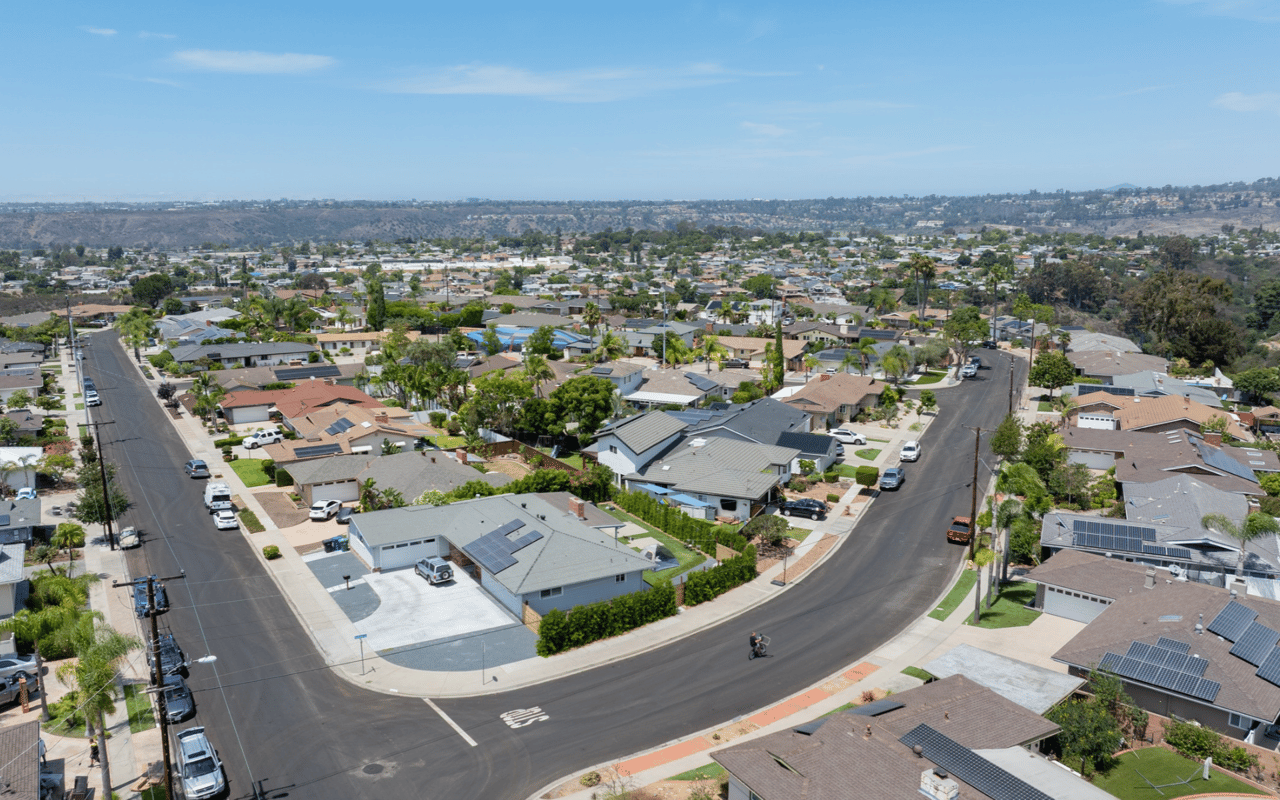
From hillside streets and established residential neighborhoods to nearby outdoor recreation, here's a closer look at Del Cerro and its place in San Diego.
October 8, 2026
“As-is” is a phrase buyers see frequently in real estate, but it can be easy to misunderstand. Here’s what the term generally means in a California home sale—and what … Read more

October 6, 2026
You hear these terms all the time in real estate—but what actually makes a market favor buyers or sellers? It comes down to the relationship between supply and demand.

September 30, 2026
Home inspections are a familiar part of the buying process, but what do they actually do? Here’s how inspections fit into a California home purchase and what informati… Read more

September 28, 2026
We see a square-footage number on nearly every home listing. But what exactly is being counted—and why can the number sometimes change depending on where you look?
You’ve got questions and we can’t wait to answer them.