What Is the Difference Between a Listing Price and a Sale Price?
Daniel Fefferman | October 15, 2026
FInance
Daniel Fefferman | October 15, 2026
FInance
If you've ever spent time looking at homes online, you've probably noticed something interesting.
A house is listed for $900,000. A few weeks later, it shows up as sold for $940,000. Another home is listed for $1 million but eventually sells for $975,000.
Same real estate market. Two different outcomes.
The difference comes down to two numbers that are frequently discussed together but represent different things: listing price and sale price.
Understanding what each number means makes it easier to interpret the information you see on real estate websites, in neighborhood market reports, and in conversations about home sales.
The listing price, also called the asking price, is the amount a property is advertised for when it is offered for sale.
It's the number you typically see most prominently when browsing available homes.
A listing price is established as part of bringing a property to market. It may reflect information about the property, comparable sales, current market conditions, and the seller's pricing decisions.
But a listing price isn't a completed transaction. It's the advertised asking amount at a particular point in time.
That distinction matters because the asking price doesn't establish what a buyer will ultimately agree to pay.
The sale price is the amount agreed upon for the purchase of a property and, when referring to a completed sale, the price at which the transaction closes.
You may also hear it called the selling price or closed price.
Unlike the listing price, which is associated with marketing a property, the closed sale price reflects the outcome of an actual completed transaction.
That's why sold-home data is often discussed separately from active listings.
A listing shows what a seller is asking. A closed sale shows the price associated with a completed purchase.
Yes.
A property's final sale price can be higher than its advertised asking price.
For example, imagine a home listed at $900,000 that ultimately closes at $940,000.
The listing price was $900,000, and the sale price was $940,000. The difference is $40,000.
That difference alone doesn't explain everything about the transaction.
Multiple offers, buyer demand, negotiations, the property's characteristics, and other circumstances can contribute to the final agreed-upon price.
It also doesn't mean that every home in the same neighborhood will sell above asking.
The outcome belongs to that particular transaction.
Absolutely.
A home listed at $1 million might close at $975,000, for example.
In that case, the sale price is $25,000 below the advertised listing price.
There can be many reasons for a difference between the asking price and final sale price. Market conditions, buyer interest, negotiations, property-specific circumstances, and the terms of the transaction can all play a role.
The difference itself doesn't establish why the property sold for that amount.
And it doesn't automatically mean the seller made a mistake or the buyer received a bargain.
It simply tells you that the completed sale price was lower than the asking price being compared.
Yes.
A property can close at the same amount as its listing price.
For example, a home advertised at $850,000 might also close at $850,000.
That means the listing price and sale price match.
It doesn't tell you whether the transaction was unusually competitive, how many offers were received, or what other terms were negotiated.
Price is only one part of a real estate transaction.
Yes, and this adds another layer to the numbers you see online.
A seller may change the advertised price while a property is on the market.
For example, a home could initially be listed at $1,050,000 and later have its asking price adjusted to $995,000.
If it eventually sells for $990,000, the difference depends on which listing price you're comparing it with.
Compared with the original $1,050,000 asking price, the sale price is $60,000 lower.
Compared with the later $995,000 asking price, it's $5,000 lower.
Both comparisons are mathematically correct, but they're answering different questions.
That's why references to the original listing price and the last listing price aren't necessarily interchangeable.
When someone says a home sold above asking, they're comparing its sale price with a particular advertised price.
For example, imagine a home listed for $900,000 that eventually sells for $945,000. That means the home sold for $45,000 above its asking price, or 5% more than the listing price.
But that difference doesn't automatically tell us how the home was priced relative to comparable properties, how many offers it received, or what other terms were negotiated during the transaction.
It simply describes the relationship between the asking price and the final sale price. The numbers tell us what happened, but they don't necessarily explain why.
The sale-to-list price ratio compares a property's sale price with its listing price, expressed as a percentage.
The basic calculation is:
Sale Price ÷ Listing Price × 100
A result of 100% means the sale price matched the listing price used in the calculation.
A result above 100% means the sale price was higher. A result below 100% means it was lower.
For example, a property listed at $800,000 and sold for $780,000 would have a sale-to-list ratio of 97.5%.
When market reports discuss average or median sale-to-list ratios, they're summarizing these relationships across a group of transactions.
Different reports may use different methodologies, including whether they compare sale prices with original or final listing prices. That distinction matters when interpreting the figures.
Not necessarily.
The sale price is associated with the agreement between the buyer and seller and the completed transaction.
An appraisal is a separate valuation process conducted for a specific purpose.
Although the two numbers may be similar, they aren't definitions of the same thing.
An appraised value can differ from the agreed-upon purchase price, and the implications of that difference depend on the circumstances of the transaction and any applicable financing requirements.
The sale price also isn't automatically a statement about what every comparable home is worth.
It is the price of one completed sale.
The reported sale price generally represents the property's purchase price, not a complete accounting of every financial detail of the transaction.
Real estate transactions can involve additional costs, credits, prorations, and other adjustments.
For example, a buyer and seller might agree to a purchase price while also negotiating a credit toward certain transaction expenses.
Those details don't necessarily appear when someone looks only at the reported sale price.
That's why the public-facing sale price isn't the same thing as the seller's net proceeds or the buyer's total cash required to complete the purchase.
Those are different financial calculations.
San Diego's housing market includes many different property types, neighborhoods, and price ranges.
A detached home in Del Cerro, a condominium in Mission Valley, and a coastal property in La Jolla may all be part of the broader San Diego market, but they aren't necessarily experiencing the same buyer activity or pricing patterns.
Looking at listing prices provides information about what sellers are currently asking.
Looking at closed sale prices provides information about transactions that have actually taken place.
Comparing the two can help describe pricing patterns within a defined group of properties, but the numbers don't automatically explain every individual sale.
The location, property type, time period, and data source all matter.
Sometimes the difference is simply timing.
One website may still display a property's last advertised price, while another has updated the record to reflect a completed sale.
A listing may also have gone through multiple price changes, and websites may present the original and latest asking prices differently.
Data sources, update schedules, and the way information is displayed can vary.
So when comparing prices, it's useful to understand whether you're looking at an active listing, a pending transaction, or a completed sale.
Those statuses represent different stages of the process.
The next time you see a home advertised at one price and later sold at another, you'll know what those numbers are describing.
The listing price tells you what was being asked. The closed sale price tells you the price at which the transaction was completed.
The difference between them is a piece of information about that sale—not, by itself, a complete explanation of the property or the market.
Stay up to date on the latest real estate trends.
October 15, 2026
The price you see on a real estate listing isn't necessarily the price a home eventually sells for. Here's what each number represents and why they can differ.
October 13, 2026
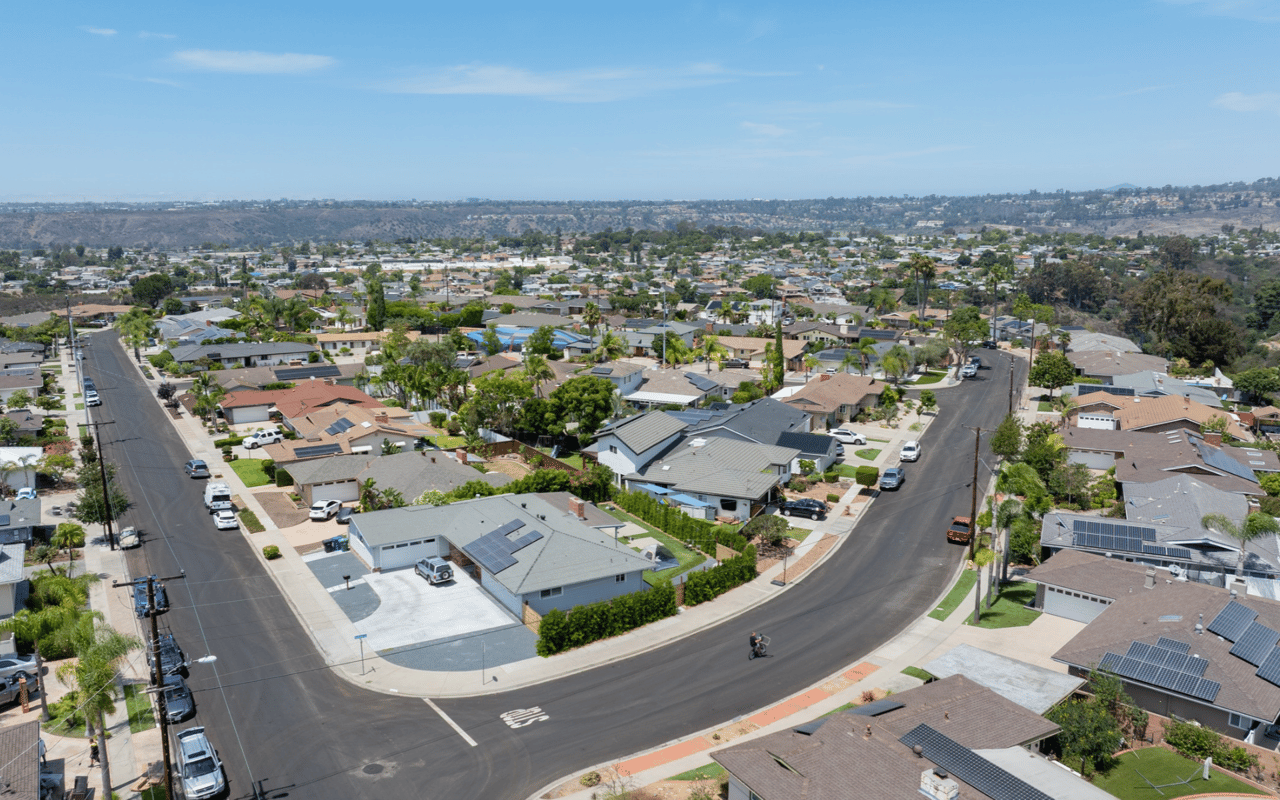
From hillside streets and established residential neighborhoods to nearby outdoor recreation, here's a closer look at Del Cerro and its place in San Diego.
October 8, 2026
“As-is” is a phrase buyers see frequently in real estate, but it can be easy to misunderstand. Here’s what the term generally means in a California home sale—and what … Read more

October 6, 2026
You hear these terms all the time in real estate—but what actually makes a market favor buyers or sellers? It comes down to the relationship between supply and demand.

September 30, 2026
Home inspections are a familiar part of the buying process, but what do they actually do? Here’s how inspections fit into a California home purchase and what informati… Read more

September 28, 2026
We see a square-footage number on nearly every home listing. But what exactly is being counted—and why can the number sometimes change depending on where you look?
You’ve got questions and we can’t wait to answer them.